

Sanda is a modern Chinese Wushu combat sport combining punches, kicks, defensive techniques and throws under a defined ruleset.
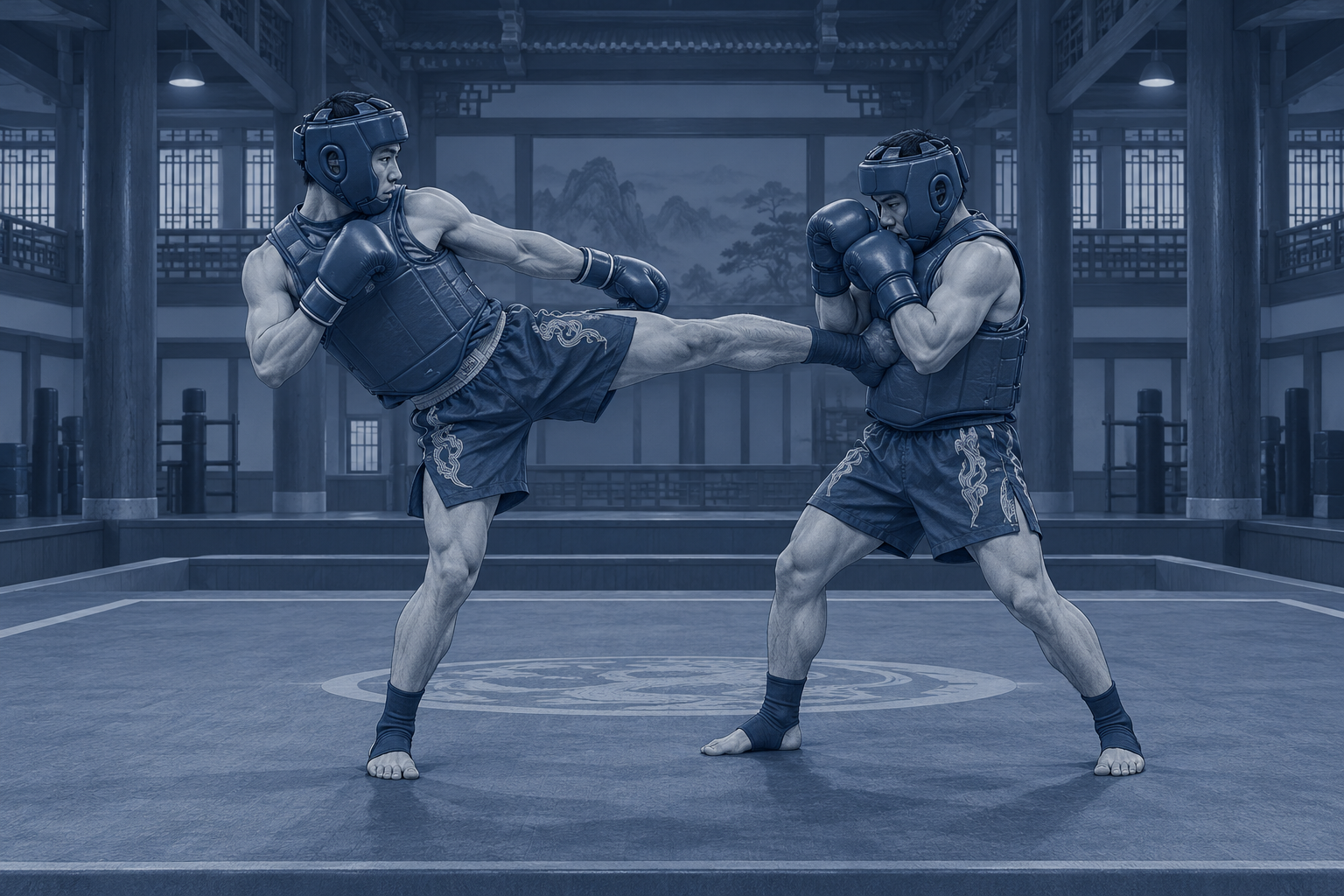
Sanda, also known as Sanshou, is a modern combat-sport discipline within Wushu. It combines punches and kicks with holds, off-balancing and throws.
Competitions are generally held on a raised platform, with athletes wearing appropriate protective equipment. The rules define permitted techniques and the limits of the bout. Sanda does not continue into extended ground grappling.
Competition Sanda is full contact. Sanda Light reduces striking intensity and adds restrictions and protective equipment; formats vary by federation, category and club.
Sanda developed as a modern combat-sport form techniques found in Chinese martial arts and Wushu. The name Sanshou is also used in the Wushu world for free-fighting.
Contemporary federations and competitions have established rules, categories and protective equipment to regulate the practice. Details vary between organizations and formats, particularly Sanda and Sanda Light.
Sanda involves managing distance and timing, then linking strikes quickly with holds or throws.
Precision, balance, mobility and the ability to defend while keeping the initiative are central. Partner drills build control and respect for safety rules alongside technical skill.
Sanda may suit people interested in a dynamic combat sport combining striking and throws, with competition available at some clubs.
Contact levels and protective equipment vary across Sanda, Sanda Light and training formats. Ask how beginners progress and which rules apply to their age and experience.
