

Combat discipline developed in the Soviet Union, focusing on throws, control, pins and submissions, with several distinct forms of practice.
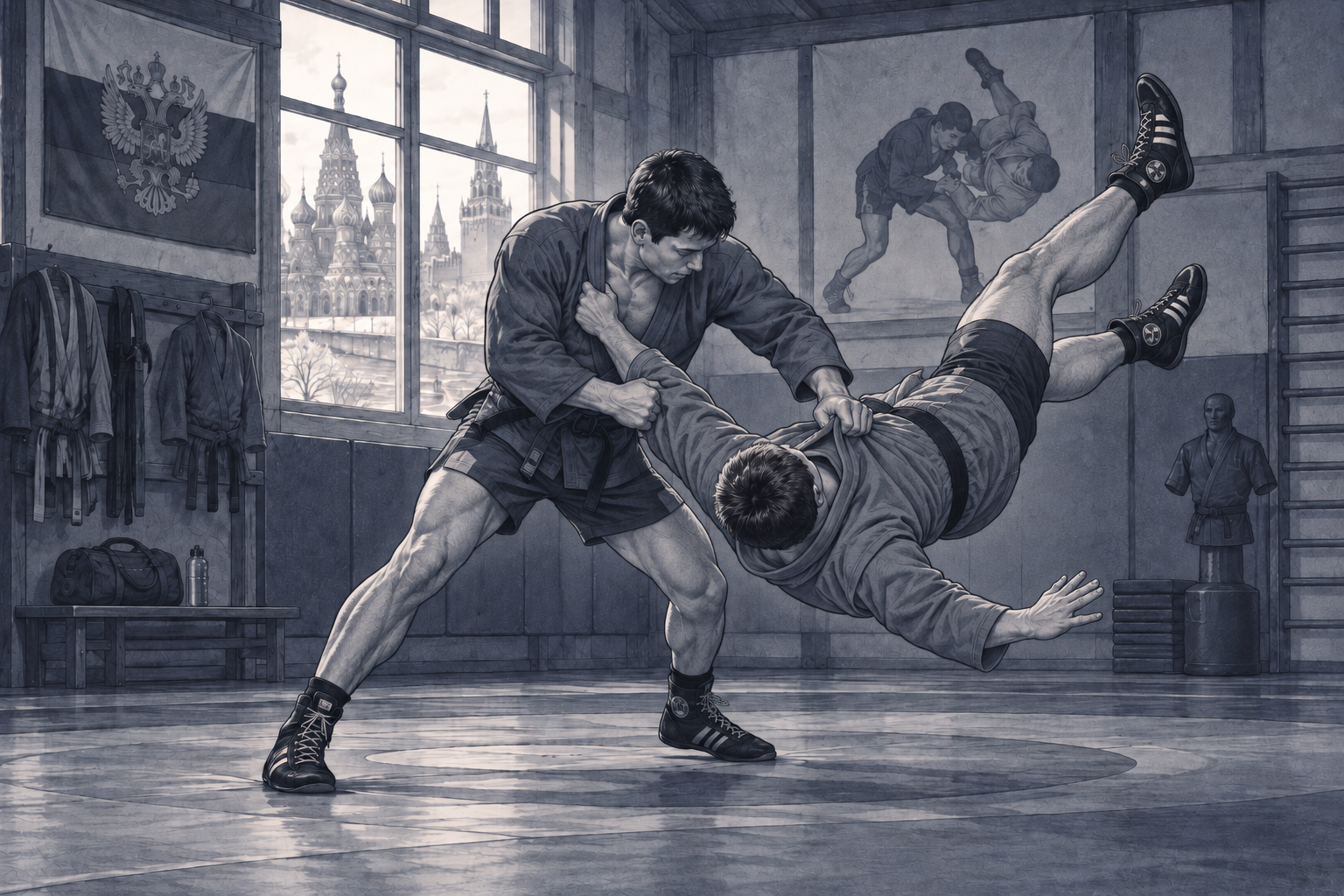
Sambo is a combat discipline primarily based on grips, throws, control and submissions. Its different forms have significantly different rules.
Sport Sambo focuses on throws, pins and submission holds without strikes.
Combat Sambo adds striking. Under adult competition rules, it can allow punches, kicks, knees, elbows, headbutts and certain strikes during groundwork. Permitted techniques vary by age and category.
Beach Sambo is practised without strikes and entirely standing. Under the French rules described in the original profile, competitors wear a white jacket with red or blue shorts and belt according to their assignment. There is no groundwork: after a throw has been assessed, the match resumes standing. Bouts are shorter than in the classic forms.
Sambo developed in the Soviet Union during the first half of the 20th century. The International Sambo Federation recognises 16 November 1938 as the discipline's official founding date.
Sambo develops off-balancing, throws, control, transitions and rapid adaptation.
Its forms must be distinguished. Sport Sambo centres on grappling and submissions without striking. In Combat Sambo, strikes are part of the rules and change distance, entries and standing-to-ground transitions. Beach Sambo, by contrast, focuses exclusively on standing throws.
Sambo may appeal to people interested in wrestling, throws and submissions.
Sport Sambo suits those seeking non-striking grappling; Combat Sambo combines grappling, submissions and striking; Beach Sambo focuses on standing throws.
