

Martial traditions from Indonesia and the Malay Archipelago combining self-defence, unarmed techniques, weapons, and artistic and cultural expression.
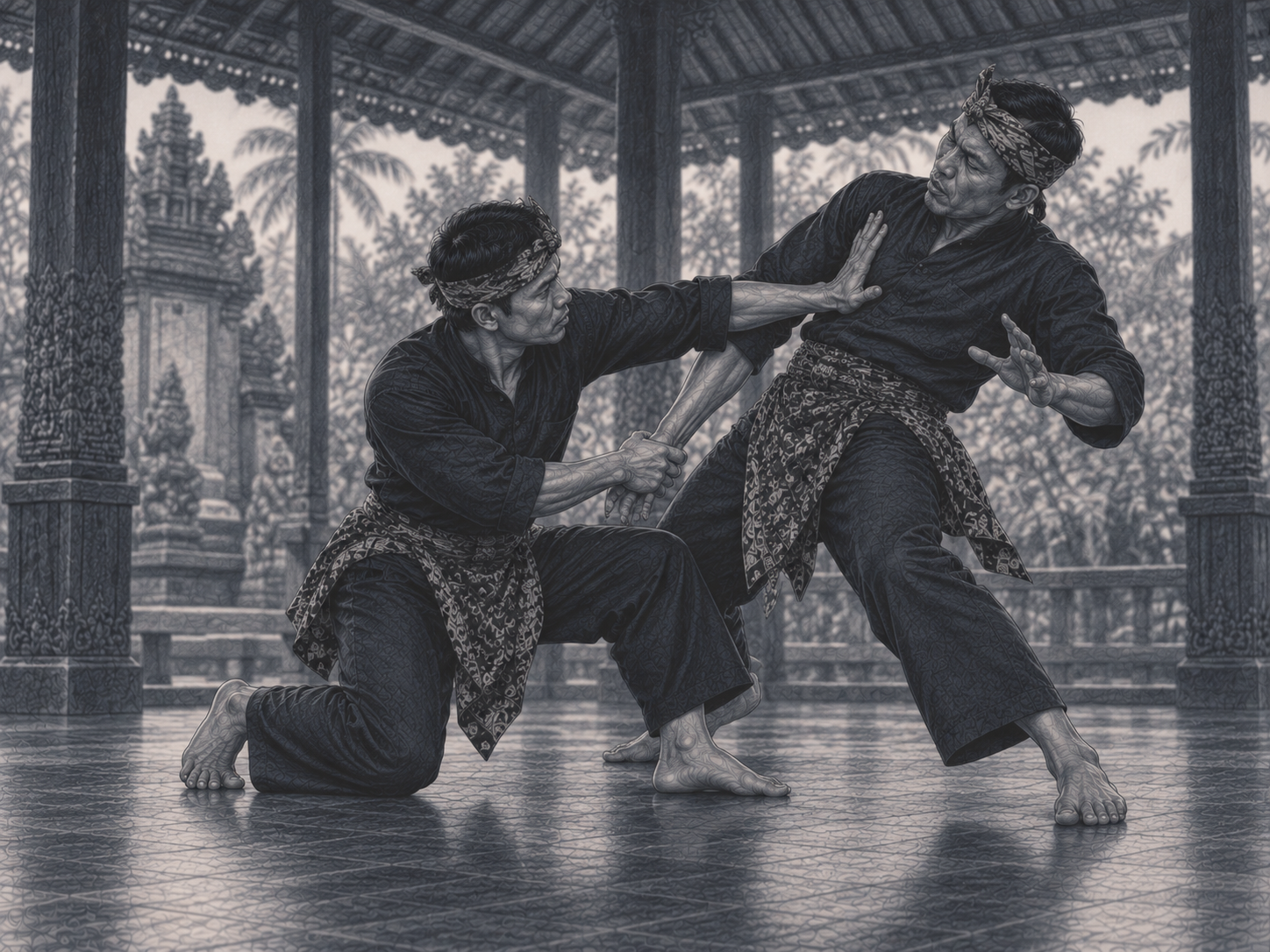
Pencak Silat refers to a family of martial traditions encompassing many regional styles. Training may include strikes, grips, off-balancing, throws, self-defence and traditional weapons.
There is no single origin that accounts for all of Pencak Silat. Its traditions developed across different regions with distinct movements, styles, music, clothing and weapons. Traditions of Pencak Silat in Indonesia were inscribed on UNESCO's Representative List of the Intangible Cultural Heritage of Humanity in 2019.
Diversity is fundamental: depending on the school, training may emphasise self-defence, cultural transmission, sport, weapons or artistic expression.
Pencak Silat may appeal to people looking for a diverse practice with a rich cultural background.
UNESCO — Traditions of Pencak Silat, Representative List (2019)
