

Naban is a traditional wrestling discipline from Myanmar. Practice develops grips, balance, throws, controls and groundwork, with progression adapted to the training setting.
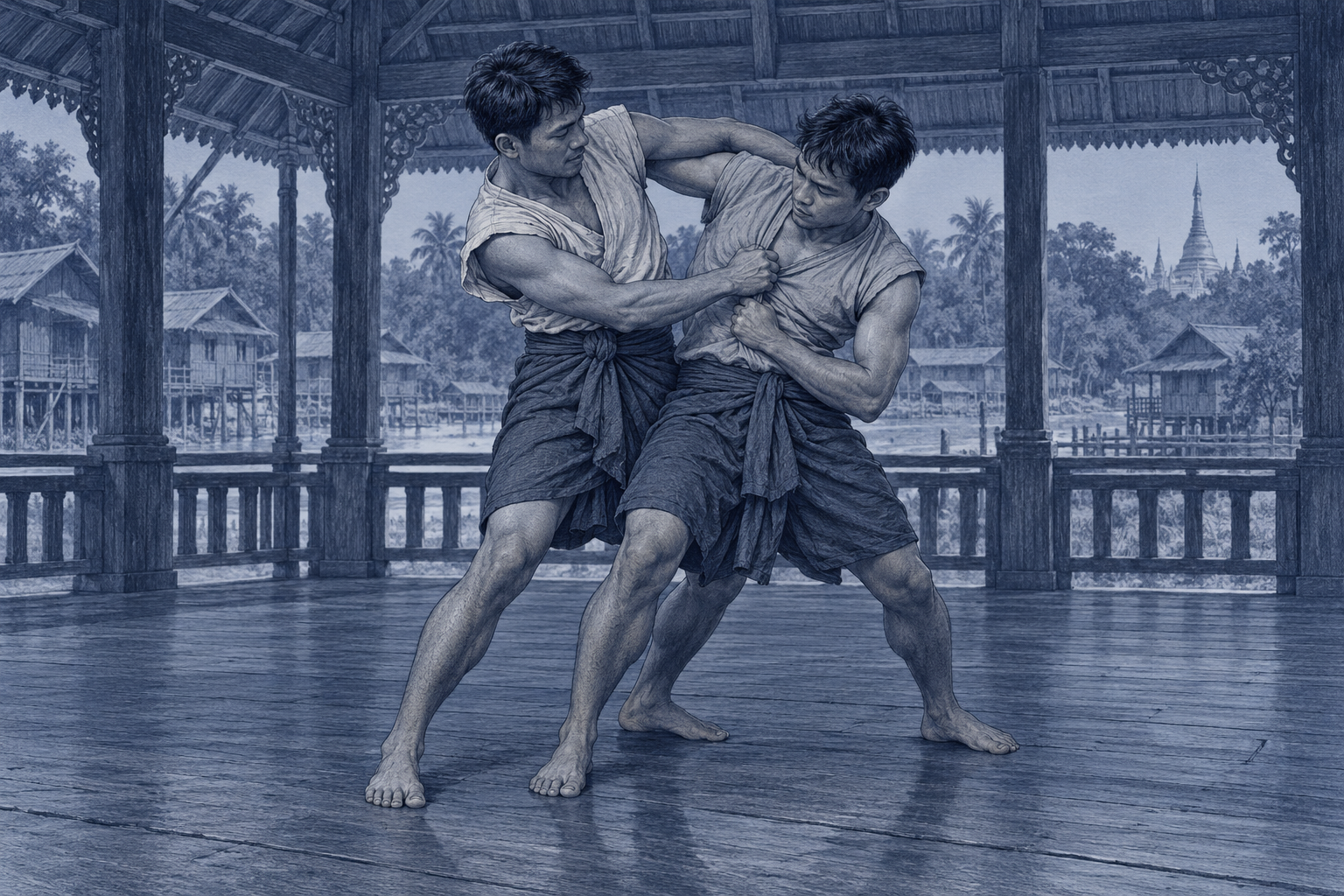
Naban is a traditional wrestling discipline associated with Myanmar’s martial heritage. Practice emphasizes physical contact, grips, balance, off-balancing, throws, controls and groundwork.
Sessions may include technical drills, partner work, controlled wrestling and progressive ground transitions. Methods, permitted techniques and intensity depend on the school, the practitioner’s level and the applicable sporting framework.
Naban is primarily practised as unarmed wrestling. This fiche focuses on its wrestling and control practice; Myanmar disciplines centred on striking or weapons are presented separately.
Naban is transmitted as a Myanmar wrestling tradition and forms part of Burmese martial heritage, often grouped under the broader term Thaing. Contemporary sources describe it as a wrestling discipline that is also developing its own path and organization.
Historical accounts and forms of practice can vary across lineages and organizations. Competition rules, permitted techniques and safety requirements must follow the national framework in force.
Naban develops control through contact, positioning and movement. Practitioners work on balance, timing, grips and leverage to off-balance or control a partner.
Wrestling is learned together: each person develops stability, reads movement and adapts without relying on strength alone. Safety and progressive intensity are part of the learning process.
Naban may appeal to people who enjoy wrestling, close-range partner work, throws and ground control.
Physical contact is central, but intensity and techniques vary with the club, practitioners’ experience and the applicable rules. Ask how beginners are introduced and which forms of practice are offered.
