
Family of grappling combat sports focused on takedowns, holds, throws and controlling an opponent without strikes.
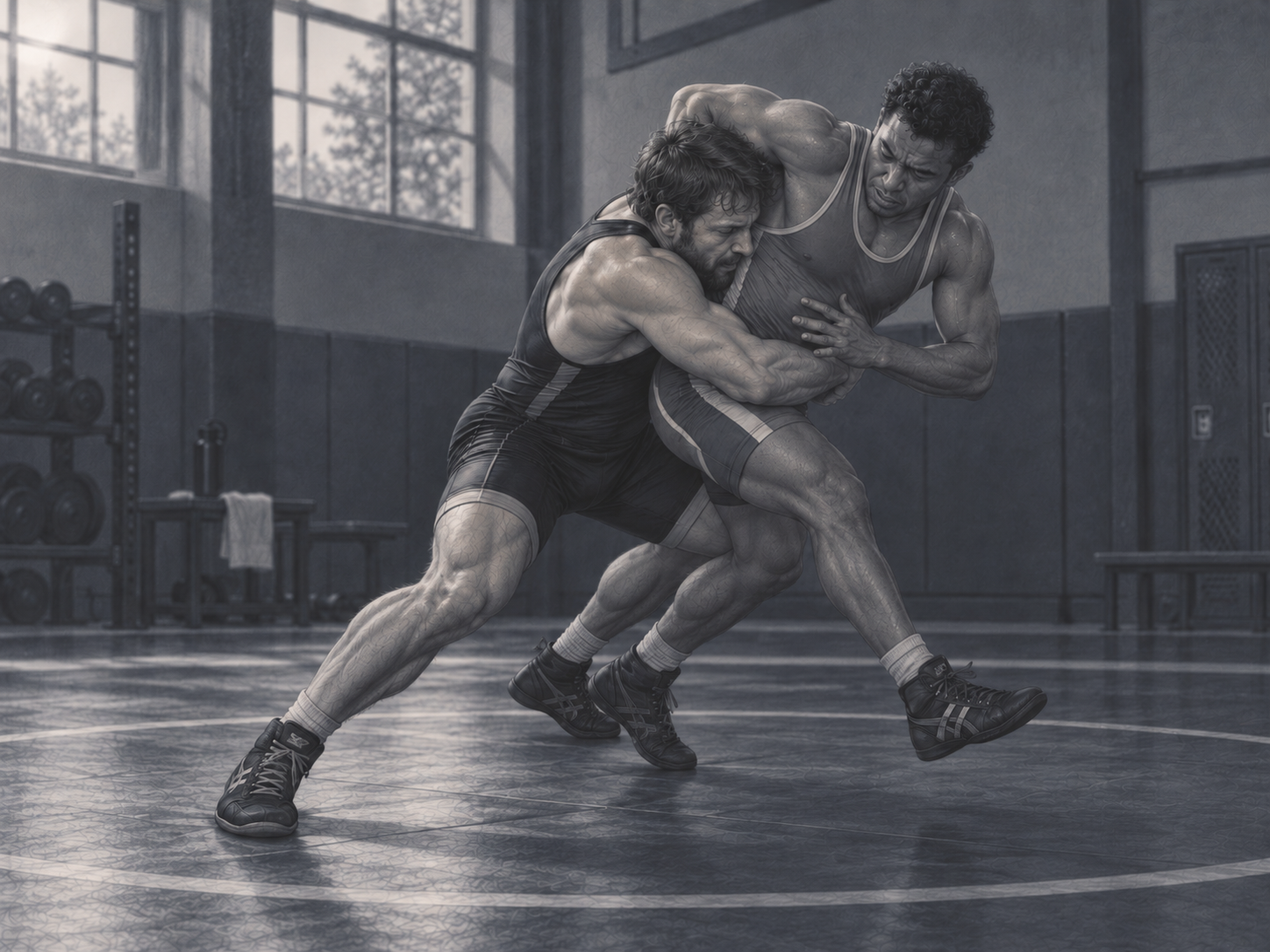
Wrestling includes several forms of grappling in which practitioners seek to off-balance, throw, take down and control an opponent.
In the best-known sporting styles, strikes are prohibited. Training focuses on stance, balance, level changes, grips, footwork, takedowns and the ability to control or turn an opponent.
Rules differ by style. Freestyle wrestling allows attacks on the legs, while Greco-Roman wrestling restricts actions below the waist. Other traditions and rules also exist.
Forms of wrestling are documented in many ancient civilisations, making it one of the world's most widespread families of combat practices.
Modern freestyle and Greco-Roman wrestling gradually developed as organised sports in Europe and became international disciplines, including in the Olympic movement.
Wrestling develops balance, off-balancing, body positioning, timing and pressure.
It also requires constant adaptation as each exchange changes with the opponent's reactions, and a favourable position can reverse quickly.
Training partners are essential to learning, so intensity must match experience and safety instructions.
Wrestling may suit people who enjoy close contact, throws, grips and non-striking opposition.
It can also provide a valuable foundation for grappling, judo and MMA.
United World Wrestling (UWW)
French Wrestling and Associated Disciplines Federation
