

A striking martial art from Myanmar. Lethwei combines strikes, movement and close-range fighting; techniques and protective equipment vary by ruleset and format.
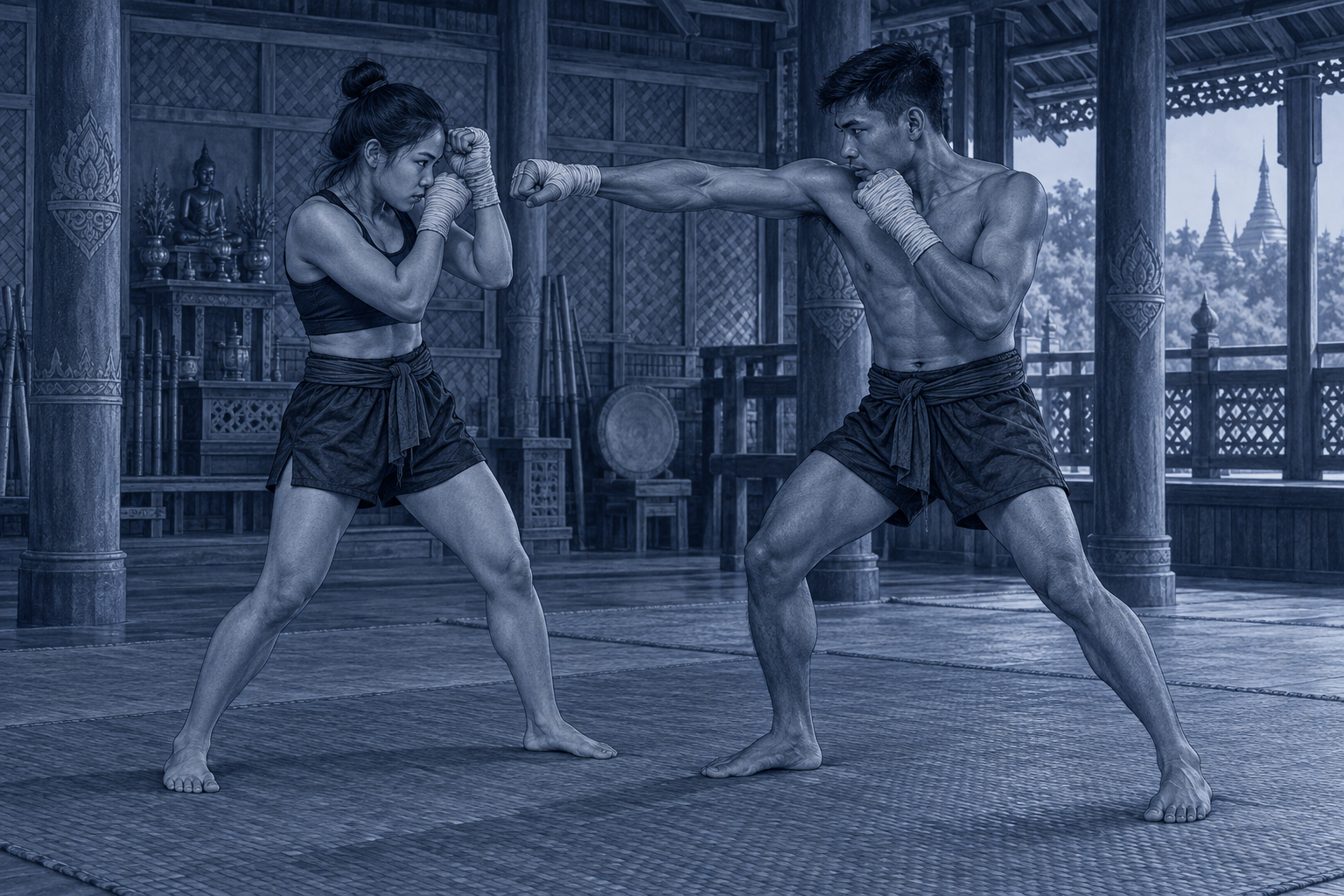
Lethwei, also called Burmese boxing or Myanmar Lethwei, is a striking practice originating in Myanmar. It is practised standing, at range and at close quarters, with punches, kicks, knees and elbows.
Rules vary by country, federation and format. Some traditional or international forms allow headbutts; the French full-contact Lethwei rules published by FFKMDA in 2015 prohibited them. Check the specific rules used by a club or competition.
Training may include footwork, guard, combinations, bag or pad work, partner drills and sparring adapted to the practitioner's level. Clinch work and permitted techniques also depend on the ruleset.
Lethwei is an unarmed discipline. Protective equipment and contact levels vary; competition does not represent every form of training.
Lethwei comes from Myanmar's martial traditions. Although often described as an ancient practice, accounts of its origins and rules have evolved across regions, periods and settings.
The discipline has developed through both traditional forms and modern competition. In France, the FFKMDA National Commission for Bando and Burmese Boxing published full-contact rules in 2015. In September 2026, the French Karate Federation announced that Thaing — Bando, Banshay and Naban — and Lethwei had joined a dedicated division, while stating that each discipline would retain its own characteristics and rules.
Lethwei places emphasis on commitment, distance management, timing, precision and adapting to an opponent's reactions.
It is practised in different settings. There is no single universal ruleset: permitted techniques, protective equipment, judging and decision criteria depend on the rules being followed. Respect for partners, agreed control during training and safety instructions are essential.
Lethwei may appeal to people looking for dynamic striking practice and close-range fighting. Training intensity can be adapted; full-contact competition requires specific preparation and supervision.
Before starting, ask which rules the club teaches, what protective equipment it uses and how it structures progression.
