

Family of Filipino martial traditions often emphasising sticks, training blades, improvised weapons and transitions to unarmed combat.
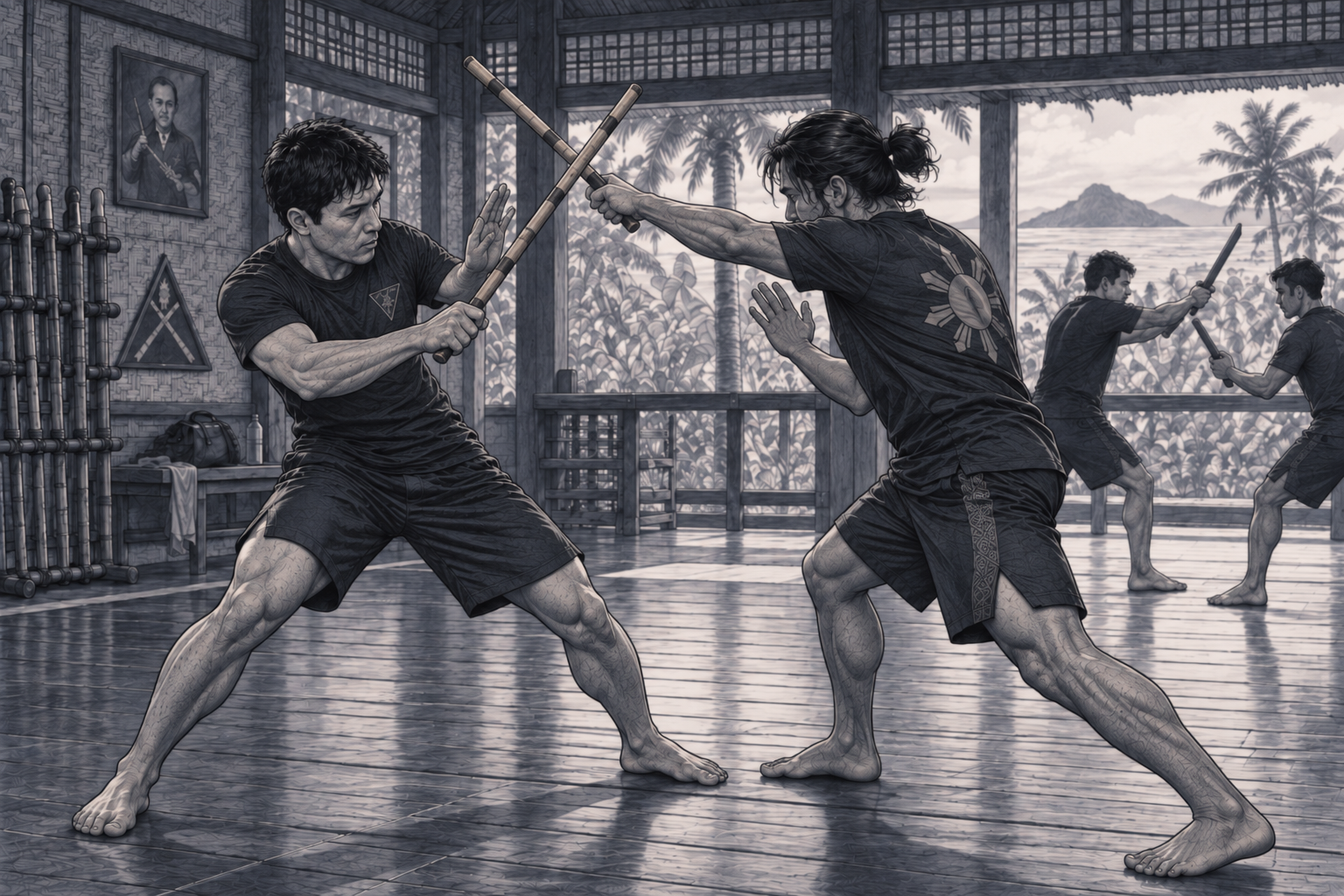
Filipino Kali belongs to a family of martial traditions from the Philippines, often grouped under the names Kali, Arnis or Eskrima.
Training usually places considerable emphasis on weapons: sticks, training blades and other implements. The same principles of distance, angles, footwork and coordination can then be transferred to unarmed practice.
Content varies widely between systems and lineages; some focus more on weapons, others on boxing, grappling or close-range combat.
Filipino martial arts developed through numerous regional and family traditions. There is no single history or founder common to all Kali, Arnis or Eskrima systems.
During the 20th century, various masters and organisations helped spread these practices internationally.
Training often centres on understanding angles, trajectories, distance, rhythm and coordination between both hands.
Weapons are used as learning tools for developing principles that may be adapted to other situations.
Kali may particularly appeal to people interested in training weapons, coordination, footwork and a martial approach built around angles and transitions.
Sources differ by school and lineage within Filipino martial arts.
