

Afro-Brazilian cultural practice combining combat, play, movement, acrobatics, music, singing and collective learning within the roda.
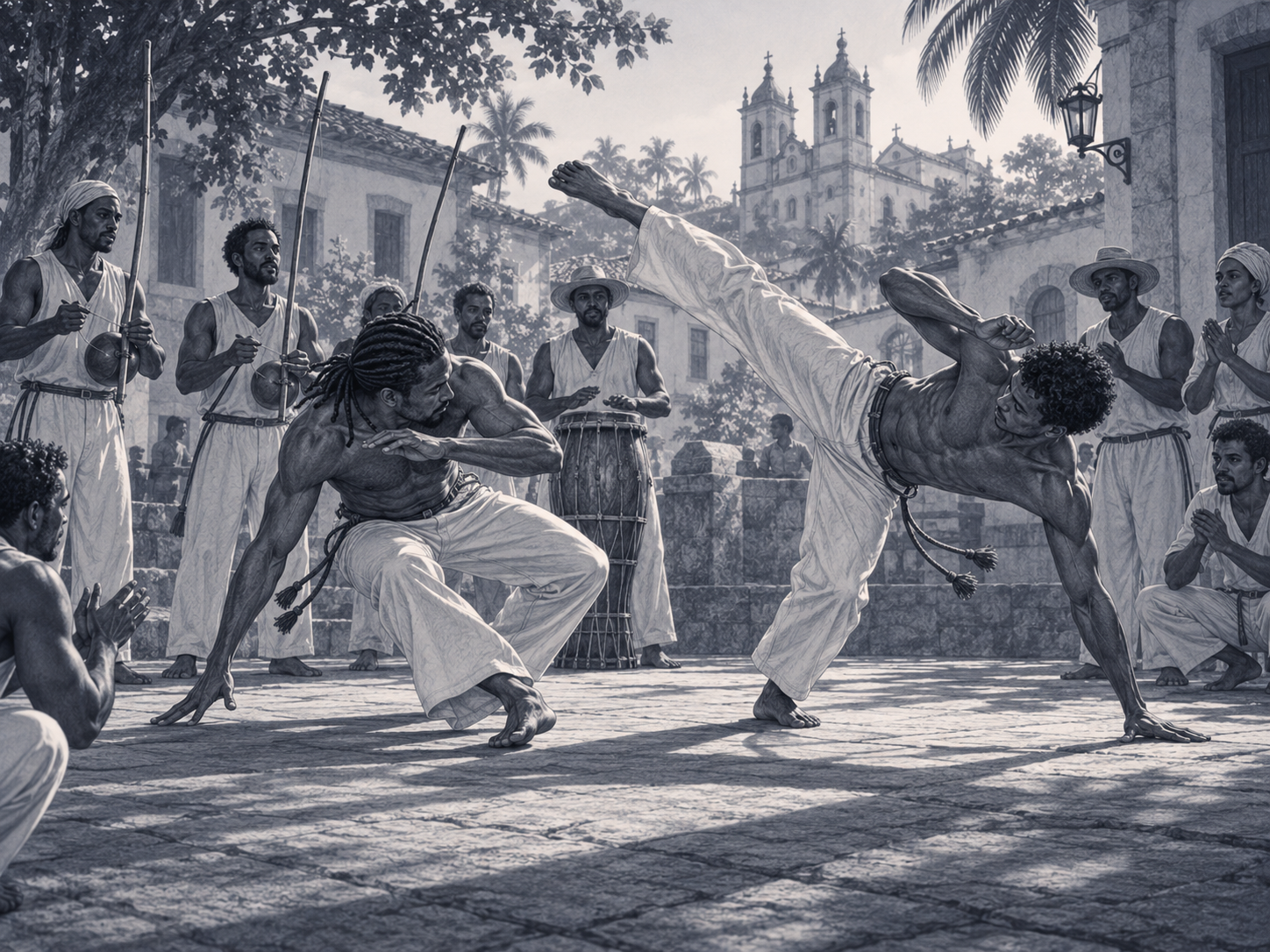
Capoeira combines fighting, physical play, cultural expression and music. Two players move inside a roda, accompanied by singing, handclapping and musical instruments.
Capoeira developed in Brazil through the history of Afro-Brazilian communities and their resistance to oppression. The capoeira circle was inscribed on UNESCO's Representative List of the Intangible Cultural Heritage of Humanity in 2014.
The game involves rhythm, observation, mobility, cunning, bodily dialogue and respect for the conventions of the roda. Music and the passing on of knowledge are integral to the practice.
Capoeira may suit people drawn to a practice where fighting, movement, music, culture and bodily expression are closely connected.
UNESCO — Capoeira circle, Representative List (2014)
